
Layer two in writing:
Writing truths that grab your audience’s attention and imagination.
How does the author grab their mind to create
Layer Two is where the writer stops telling and starts pulling. To grab an audience’s mind, the author must first unsettle the ground they’re standing on. It’s not about information—it’s about ignition.
Here’s how it works:
Disruption – The first truth presented must fracture expectation. A sentence that makes the reader pause, tilt their head, and whisper, “Wait, what?” This is the hook that slips past their defenses. Invitation – The writer doesn’t explain everything. Instead, they leave a gap. A well-placed silence, an unanswered question, a crack in the story where the reader’s imagination has to step in. That gap is where the mind begins to create alongside the author. Resonance – The truth you drop must connect to something primal: mortality, power, betrayal, love, time, existence. The deeper the root, the stronger the grip. Echo – Each new layer reflects the last, like mirrors facing one another—fractal truths that repeat but never quite the same. This echo keeps the mind searching, circling, needing more.
The audience isn’t just reading—they’re co-creating the experience, compelled forward because their own mind is now entangled with the author’s weave.
Example:
“You thought death was an ending. That’s what he believed too, until the night his heart stopped and the pattern began. The doctors called it failure, but what they couldn’t see was how his final breath folded inward, multiplying, each version of himself dying in a thousand mirrored worlds. And here’s the question no one dares ask: if a man can die more than once, which of his deaths is the real one—and which one of him is still alive?”
Hmm? Offering the reader an opportunity to create with their own knowledge and experience in understanding the presentation given to them by your own sentences.
Learning to write is also a creative skill that develops the self awareness in creating a story of imagination and reader possibilities.
When you write, you’re not just creating a story—you’re testing the edges of your own awareness. Each choice of image, rhythm, and silence reveals how you see the world, how you process wonder, and how you invite others into that vision.
Imagination becomes the bridge. The writer paints just enough for the reader to step in, but leaves open doors, windows, and shadows where the reader’s own mind supplies the rest. That’s where possibilities are born—when your words awaken landscapes that didn’t exist until someone else read them.
In that way, writing is a dual skill:
Creative self-awareness—the ability to know what drives your curiosity and how to shape it. Imaginative generosity—the ability to leave space for the reader to live inside your creation.
Example:
Here’s a side-by-side comparison to show the difference between writing without self-awareness and imagination, versus writing with them:
Flat, surface-level writing (no awareness):
The man walked into the old house. It was dark and dusty. He felt scared because he thought someone might be there.
This tells us what happened, but it doesn’t invite the reader’s imagination or leave space for possibilities.
Alive, imaginative writing (self-aware + reader possibility):
He stepped into the house, and the air itself seemed to resist him—dust spiraling as if stirred by unseen breath. Shadows clung to the walls like memories that hadn’t been granted rest. He told himself the fear was foolish, yet every creak of the floorboard sounded like a footstep that wasn’t his.
Here, the writer is aware of atmosphere (not just action) and uses imagery that lets the reader feel the tension. Instead of explaining “he felt scared,” the writing opens sensory doors so the reader experiences that fear firsthand.
here’s a daily writing exercise you can use to strengthen both self-awareness and imaginative layering:
🌌 The Three-Layer Writing Exercise
Step 1 – The Plain Layer (30 seconds)
Write a sentence that simply tells what happens.
Example: The child dropped the glass.
Step 2 – The Awareness Layer (1–2 minutes)
Rewrite it, but this time include what it means or how it connects to a deeper feeling, thought, or theme.
Example: The child dropped the glass, and for a moment the kitchen filled with the silence of something fragile breaking too easily.
Step 3 – The Possibility Layer (3–5 minutes)
Rewrite again, opening space for the reader’s imagination. Add imagery, mystery, or suggestion, but don’t explain everything. Leave a gap.
Example: The glass slipped from the child’s hand, falling as though time slowed to watch. The shatter was louder than it should have been, as if the house itself knew that once something breaks, it never returns in quite the same shape.
✨ How to practice:
Do this with any moment—mundane or dramatic. Start with the plain fact. Then add awareness (the meaning). Then open it into possibility (the imaginative space).
Over time, this builds the instinct to write with layers that both reflect your inner awareness and invite the reader’s imagination.
here’s a daily writing exercise you can use to strengthen both self-awareness and imaginative layering:
🌌 The Three-Layer Writing Exercise
Step 1 – The Plain Layer (30 seconds)
Write a sentence that simply tells what happens.
Example: The child dropped the glass.
Step 2 – The Awareness Layer (1–2 minutes)
Rewrite it, but this time include what it means or how it connects to a deeper feeling, thought, or theme.
Example: The child dropped the glass, and for a moment the kitchen filled with the silence of something fragile breaking too easily.
Step 3 – The Possibility Layer (3–5 minutes)
Rewrite again, opening space for the reader’s imagination. Add imagery, mystery, or suggestion, but don’t explain everything. Leave a gap.
Example: The glass slipped from the child’s hand, falling as though time slowed to watch. The shatter was louder than it should have been, as if the house itself knew that once something breaks, it never returns in quite the same shape.
✨ How to practice:
Do this with any moment—mundane or dramatic. Start with the plain fact. Then add awareness (the meaning). Then open it into possibility (the imaginative space).
Over time, this builds the instinct to write with layers that both reflect your inner awareness and invite the reader’s imagination.
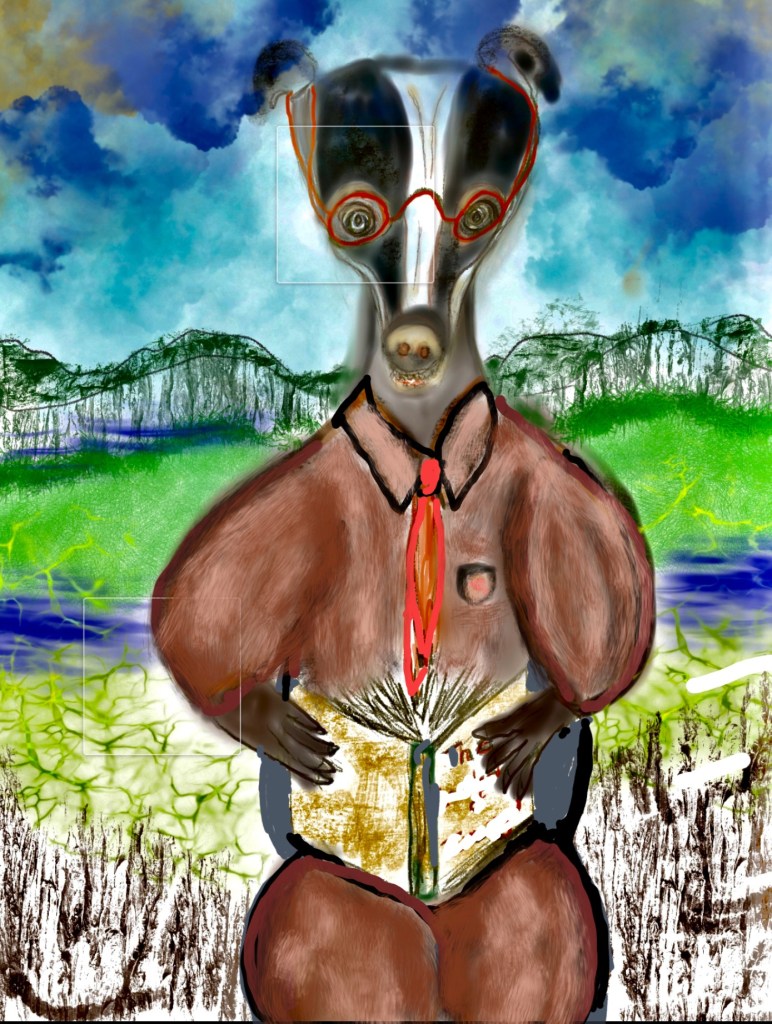
Lastly, do your own art. It doesn’t matter if you scribbled the peace or it’s a masterpiece. Just do it because then… you’re feeling your own writing.
 My Near Death Experience Arts and Thoughts