
By BoJenn
That’s one of the oldest and hardest questions, and yet the answer is layered and human by natural design. But why?
At its root, hatred isn’t born — it’s made. It grows from fear, pain, and ignorance. When people feel threatened — by difference, loss, or the unknown — the mind builds barriers instead of bridges. It’s easier to despise what we don’t understand than to face our own vulnerability.
And people labeled their lack of knowledge as “demons,” “devils,” and other usually religious terminologies. But why?
Throughout history, when people met forces they couldn’t explain — within themselves or the world — they gave those forces names. The unknown was too vast, too terrifying to leave unshaped, so humanity personified it. “Demons,” “devils,” “spirits,” and “monsters” became ways to externalize fear and give form to chaos.
It’s a survival instinct rooted in storytelling: if you can name something, you can imagine controlling it. Before science, psychology, or even language had the words for trauma, mental illness, or subconscious drives, humans described them in the language of myth.
A person tormented by grief or voices in their mind wasn’t understood as suffering from internal conflict — they were “possessed.” A storm that tore through a village wasn’t meteorology — it was wrath. The dark impulses within the self were too shameful or confusing to face, so they were cast out — projected onto some outer, moral enemy.
The tragedy is that this projection never really solved anything; it only deepened the cycle of fear and persecution. Yet paradoxically, it also gave birth to art, myth, and religion — humanity’s attempt to reach across the veil of the unknown and speak with it.
But hatred also serves a psychological function: it gives a false sense of power. When people feel powerless, they often redirect that energy outward — toward a group, an idea, a symbol — to regain control. That’s why propaganda, war, and division thrive where insecurity is strongest.
On a deeper level — even a mystical one — hate and love are not opposites, but reflections of the same intensity of focus. Both are energies of attention. One creates, the other corrodes. Humanity has yet to collectively master its own emotional alchemy — to transform fear into understanding, and difference into depth.
Then let’s walk through this from both the mystical and psychological lenses, because they mirror each other like the two sides of a single soul.
The Psychological Lens — Jung and the Shadow
Carl Jung called the hidden, repressed aspects of ourselves the Shadow — everything we deny, fear, or refuse to acknowledge within our own psyche. When a person cannot face their inner rage, jealousy, lust, grief, or guilt, the mind casts these qualities outward. The result? We see “evil” or “demons” in others — not realizing we’re staring into a mirror.
This projection is not merely metaphorical. On a collective scale, it explains persecution, witch hunts, racism, and ideological hatred — humanity trying to exorcise its own darkness by burning it elsewhere. In truth, the “devil” we fight most fiercely is the one we have not yet integrated.
Jung said: “One does not become enlightened by imagining figures of light, but by making the darkness conscious.”
When we name our inner demons without fear, they lose their power. The Shadow then becomes not a monster, but a teacher.
The Mystical Lens — Gnosticism, Hermeticism, and the Mirror of Creation
In Gnostic and Hermetic teachings, darkness isn’t the enemy of light; it’s its reflection — the womb through which creation learns itself. In the Hermetic axiom “As above, so below; as within, so without,” the demons of mythology are allegories for the forces within human consciousness.
To the Gnostic, “the devil” was not an external tyrant, but the symbol of ignorance — the blindness that keeps the divine spark (the soul) from remembering its origin. To overcome the demonic, one must awaken — not destroy.
Mystics saw every shadow as a gate:
Lucifer — the light-bringer — was not merely a rebel, but a symbol of fallen knowledge, misused illumination. The Serpent in Eden was both deceiver and initiator — bringing the awareness of duality. Demons became the embodiment of unmastered forces of nature and mind.
In this understanding, the act of naming “devils” was never just fear — it was translation. It was the ancient mind trying to speak to its own unconscious through symbol and myth.
Where the Two Meet
Modern psychology and ancient mysticism ultimately agree on a simple, powerful truth:
The evil we perceive outside us is the unhealed portion of ourselves still asking to be known.
When humanity stops running from its inner darkness and begins listening to it — with courage instead of superstition — the demons transform into wisdom, and fear into understanding.
Something to ponder today. Ask yourself, “how can I help to stop hatred?”
My Art
Be the solution to end hatred. It’s up to you.
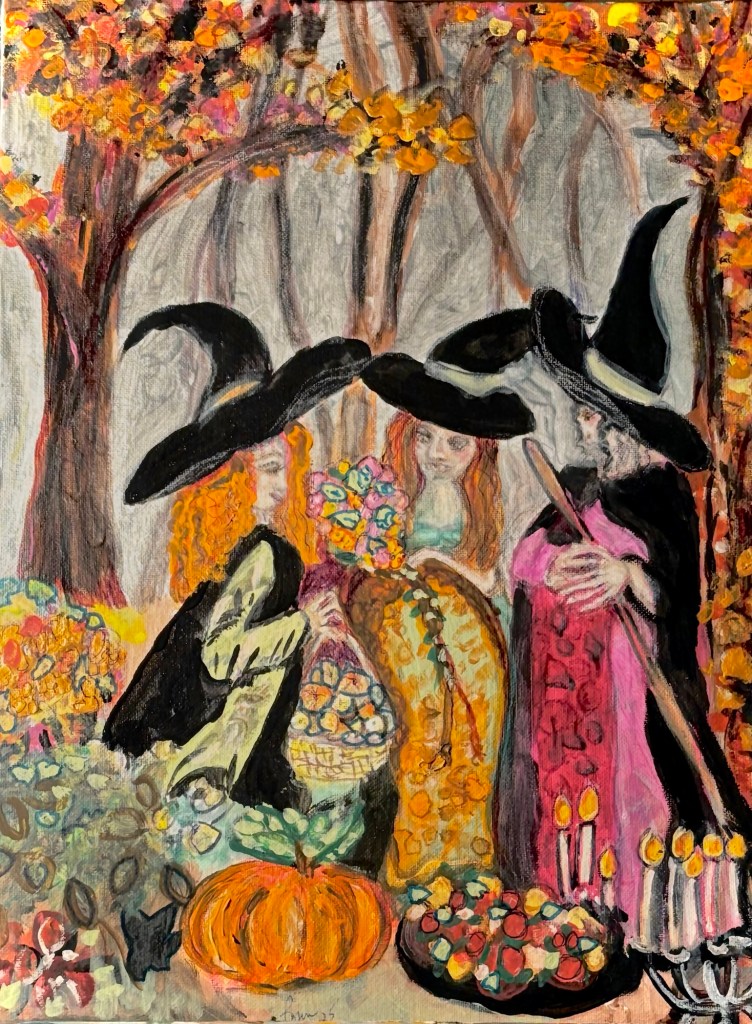
 My Near Death Experience Arts and Thoughts