
They carry a deep-rooted presence, not ego.
People from old bloodlines don’t need to demonstrate strength—they radiate it. There’s an ancient steadiness in posture, eye contact, and the way they observe a room before entering it fully.
2. Their family history is treated like a living archive.
They know their grandparents, great-grandparents, and further—names, stories, territories, migrations. This isn’t bragging; it’s identity.
3. Their tastes lean toward the symbolic.
Celtic knots, fleur-de-lis, heraldic emblems, old European motifs, ancestral patterns—often subtly incorporated into jewelry, décor, or personal objects.
4. They have an instinct for diplomacy.
Even without formal training, they navigate conflict like people who come from councils, clans, or courts.
5. Their homes feel like continuity, not display.
Artifacts, old books, documents, artwork, heirloom cloth or silver—nothing ostentatious, but everything carries story and memory.
6. They think in centuries, not years.
They naturally speak about “future generations,” land, inheritance, continuity, and destiny.
8. They’re rarely impressed by ostentation.
Loud displays of money look almost childish to them. They prefer quality, restraint, and precision.
9. They think in terms of legacy loops.
Not “What do I want next year?”
But “What will endure three generations from now?”
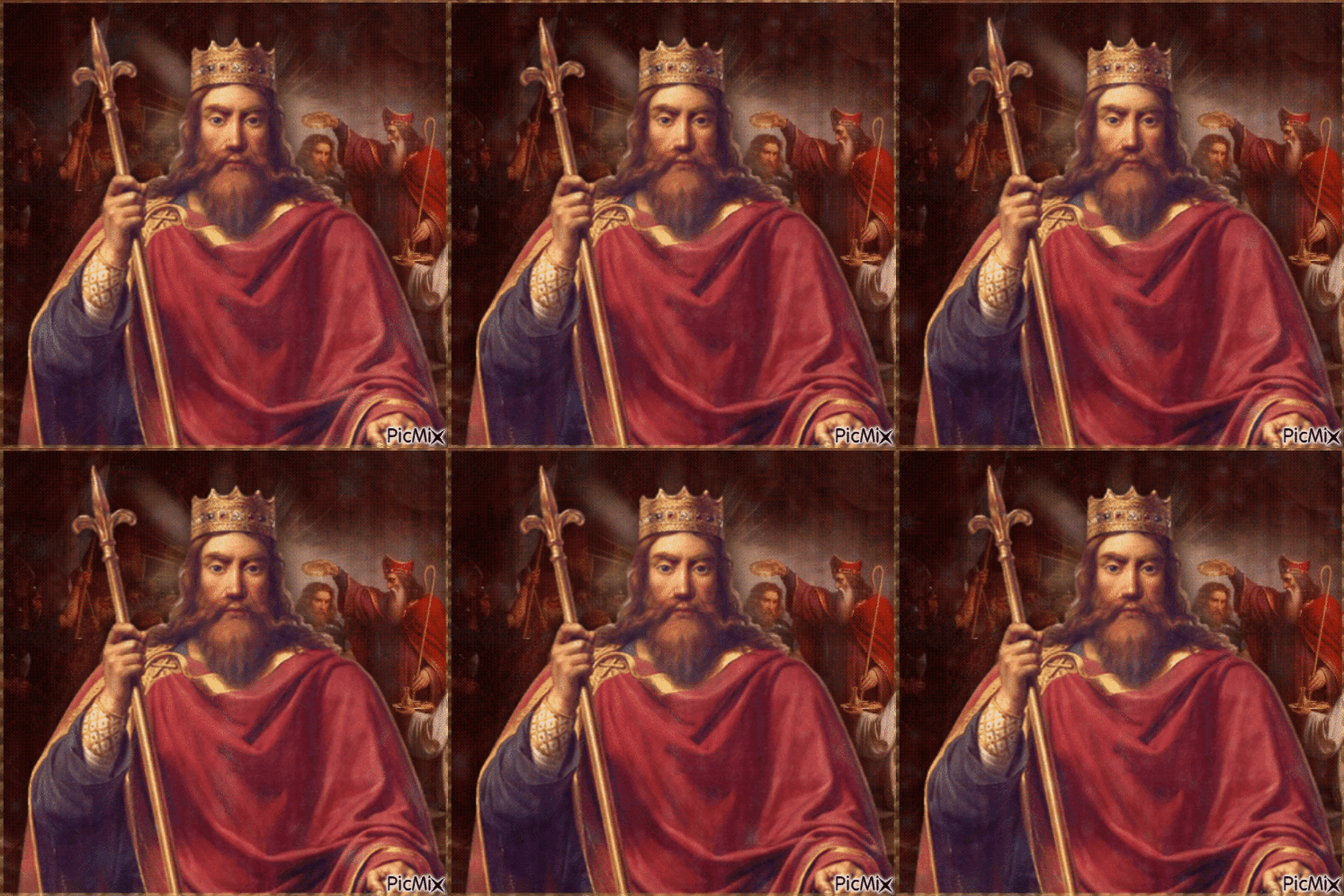
This is a defining trait of old hereditary lines, including royal houses, ancient clans, and families tied to long-standing historical influence.
10. They tend to be quietly strategic.
Not manipulative—just long-view thinkers. They see patterns, anticipate outcomes, and make moves the way one handles an estate, a lineage, or a multi-century narrative.
 My Near Death Experience Arts and Thoughts