Quantum Truth
Quantum truth says that reality is not fixed in one rigid state.
At the smallest scales of existence:
particles don’t sit still, outcomes exist as probabilities, observation changes what is observed, and multiple potential states can coexist before collapsing into one.
In this view, truth isn’t a single frozen fact — it’s a field of possibilities.
What becomes “real” depends on interaction, alignment, and perspective.
Quantum truth reveals that the universe is dynamic, not static.
It shows that reality is a living process rather than a carved-in-stone object.
Absolute Truth
Absolute truth is the underlying structure that exists regardless of human interpretation:
an event either happened or didn’t, laws of nature operate consistently, a cause leads to an effect, and the core foundation of reality doesn’t disappear because someone misremembers it.
Even if human beings misunderstand, distort, reinterpret, or argue about it —
absolute truth remains what it is.
It is the bedrock beneath the shifting sands of perception.
How They Fit Together
These two ideas aren’t opposites.
They’re layers of the same universe.
Quantum truth describes how possibilities behave. Absolute truth describes what ultimately becomes the outcome.
Quantum truth is the canvas of potential.
Absolute truth is the final stroke of paint.
Quantum truth is fluid.
Absolute truth is what solidifies once the interaction is complete.
You can think of it this way:
Reality begins in quantum truth and settles into absolute truth.
Both exist; they simply operate at different stages of how the universe structures itself.
My Art
Real or not
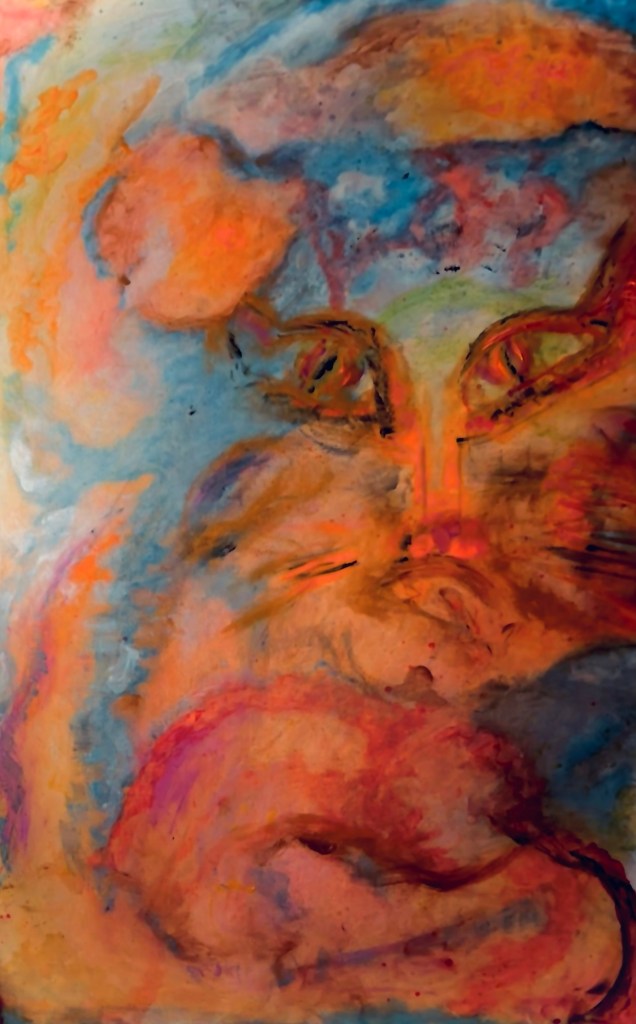
 My Near Death Experience Arts and Thoughts