
By BoJenn
Introduction
A scream was heard that summer day.
Three-year-old Catherine’s cry rose into the mystical wind, her voice breaking free of her small body and pouring into the unseen currents of the world. She called to the wind and begged it to find Thomas. With all the strength her little heart could muster, she bellowed her plea into the breeze.
The current carried her voice.
It did not stop.
It traveled lifetimes—into the place where memories dwell. Through the dark space of matter, it moved, seeking the answer to a child’s petition. It passed through woven prayers, spirits, and whispered intentions, asking again and again:
“Have you seen the child, Thomas?”
Even as an older woman, Catherine could not still the determination of that inquiring storm. The question of her childhood never loosened its grip. The wind’s mission was to resolve the prayer that had been released long ago.
“A request sent in innocence,” Eleanor explained one day, “does not disappear. When that call finally reached my soul, I came riding in on the wind.”
That was the day Tadhg Harding entered the story—wearing a kilt, an angelic smile, and a presence that felt both ancient and familiar. Having just recited the poem for Catherine, he added simply,
“Eleanor wrote it.”
Catherine received the moment with wonder and relief, as though time itself had exhaled.
“At last.”
Now Tadhg welcomes you into this tale—the story of a woman named Elizabeth Catherine Dubois—and into the unseen architecture that answers prayers long after they are spoken.
Because everyone needs help sometimes.
The supernatural kind.
This is the story of when, where, why, and how angels—perhaps fairy godmothers—listen…
and respond.
“Welcome. Thank you for stopping by for a cup of orange and cinnamon tea. Please, make yourself comfortable—settle into a cozy chair—and listen as I tell you a story about the magic of love, the dignity of grace bestowed by God, and the power of deliverance from oppressive spirits upon an older woman who was once her parents’ little fairy princess.”
Tadhg offers the invitation with a wink—and with hope.
Like so many humans who have lived long enough to gather sorrow, Cat Dubois nearly lost her happiness to ill-fated happenstances that could not be avoided. Time, circumstance, and suffering pressed in on her life. The difference between Cat and so many others—those who seem to fade quietly into death beneath the weight of grief and despair—was simple and profound:
As a young girl, she cried out a prayer.
That prayer found its way to the ears—and the heart—of God.
And so, God responded.
He sent Eleanor, who came riding in on the wind.
This story is about the struggle of life and the resolutions that arrive many, many years later. It is about answers that do not always come quickly—but when they do come, they arrive just in time, and often in ways that feel unmistakably magical.
“So, allow me to introduce myself,” Tadhg continues.
“My name is Tadhg Harding, and I am a keeper of stories and poetry. That is the meaning of my name, and it is also my purpose.”
He smiles gently.
“I am both the storyteller and an active participant in this tale. I am also related to Eleanor—an oh-so integral character. We are bound by spiritual order and virtue. Together, we travel through time, space, and the world itself. Come closer. Draw near. There is nothing to fear—this story is an active adventure.”
Humans often question the fairness of a loving God.
Life can feel like a relentless test of endurance.
Why are some people fortunate—blessed—while others ache beneath despair and tragedy?
Why does the innocence shining in children’s faces so often erode under the weight of hardship across a lifetime?
Why are some untouched by horror and deep valleys of sorrow, while others seem trapped on a never-ending roller coaster of fear and longing?
To understand goodness, darkness must first be known—this lesson has been taught long before this story began.
Behold: the light of God shines upon paths of danger, not to harm us, but to guide us away from what would consume us and toward enlightenment—toward the growth of the soul.
We shall lie down in green pastures.
There, our souls will be restored.
And one day—through grace, awareness, and love—we will learn to act like God.
Could it be in a different dimension—or even another lifetime?
This question, of course, is an ancient one, debated in sanctuaries and bars alike, pondered by the righteous and the sinners across a world of speculators.
If we choose to accept the calling to a higher self—our assignment, our journey into the divine syllabus prepared for each of us individually—then this road must eventually be traveled. And if that is so, then perhaps we shall one day be like Him and see Him in the splendor of His love. For within human living, love, mercy, and grace are the unmistakable traits of the Father, who descended from the lights above and now resides within our souls.
Unique we are.
Good and evil will be known, yet few will defeat dragons within a single lifetime.
“Dragons are real,” many will insist.
But I ask you—are they real today? Or are dragons, whether real or imagined, simply conduits to godliness?
Within the very best of us—and within the most broken of masterpieces—lie imprisoned spirits, trapped by the flesh of mankind, the Adamic nature. Adam was formed from the dirt of this Earth. Neither Adam nor his seed will live forever. But the Spirit of God survives eternally. Spirit is infinity.
We are not.
Between flesh and spirit stands the soul—the ego—the dual nature that longs for Earth while reaching for heaven. It begins innocently, then falls into grace. The quest, our mission, our lesson, is to defeat the opponent within: the ego that resists transformation.
This story, then, is about confronting the challenger of God—the voice of the accuser. The strong one of this Earth whispers endlessly to Adamic humans, listing every reason failure must be their final destination.
The devil within is conquered metaphorically—in isolated forests, deep-flooded valleys, and on rocky hillsides; in snake-filled pits and vast oceans where a single lifeboat drifts without horizon; in lonely, locked cells and cold hospital rooms; in the loss of a child or beloved; in burning towers, crashing planes, and bomb-shelled cities; in orphaned children, unwed mothers, and life-altering moments that fracture time itself.
These trials do not end.
The adversary is granted an unending reserve of tests.
Yet the purpose of the test is not destruction—it is expansion. Ego and character are stretched toward divine inspiration. Sometimes the transformation succeeds. Sometimes it does not. Perhaps the lesson is not completed in one lifetime, but across many.
The soul determines the outcome of each lap.
The soul steers the course.
It develops, refines, remembers.
And graduation occurs as we become—slowly, imperfectly, courageously—more and more like God.
Our story begins now.
It is the story of a woman’s journey—from innocence, to enslavement, and finally to freedom—within a single lifetime. You may find yourself sharing the sorrow and pain of her battles, remembering your own innocence as you witness hers, first known through the magic of Cat’s childhood.
You may experience her rejection from the fellowship of those with whom she once belonged. You may feel her hurt, her loneliness, her isolation—and recognize her addictions as echoes of your own struggles.
And just when you believe there is no hope left for her—
or perhaps, no hope left for you—
you may find yourself cheering.
Because there is magic and goodness even in a dark world.
There are fairy godmothers, angels, and guides who arrive precisely when they are needed most.
I welcome you into the story of Elizabeth Catherine Dubois.
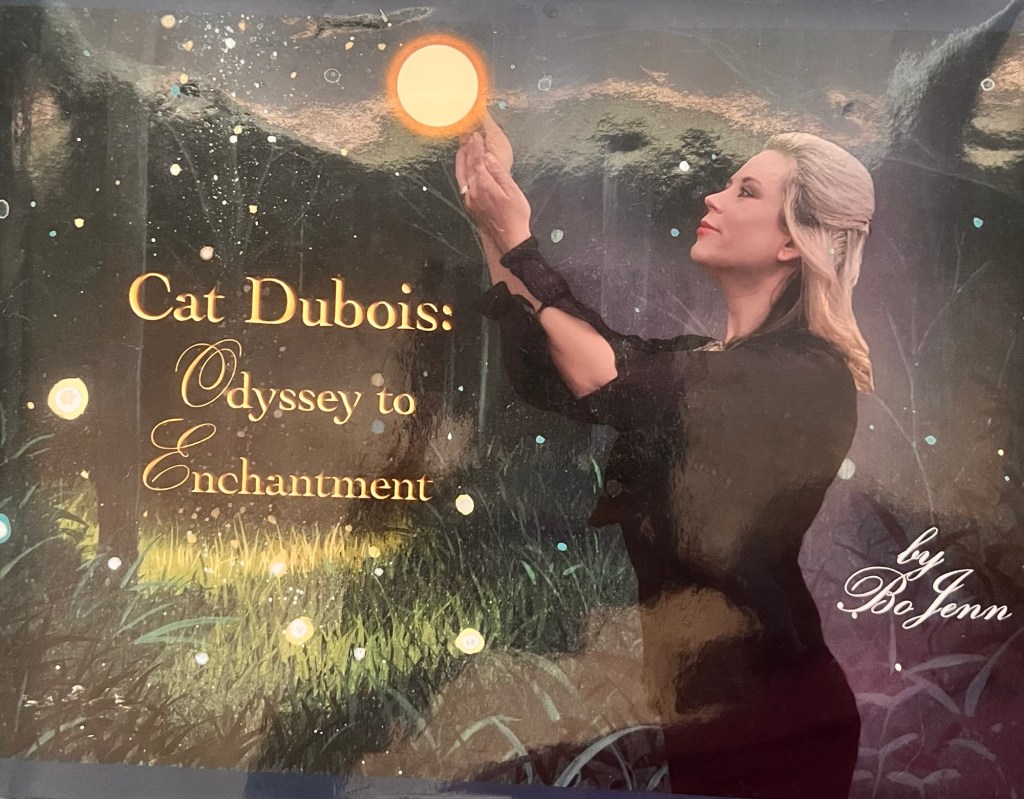
The hardbound copy
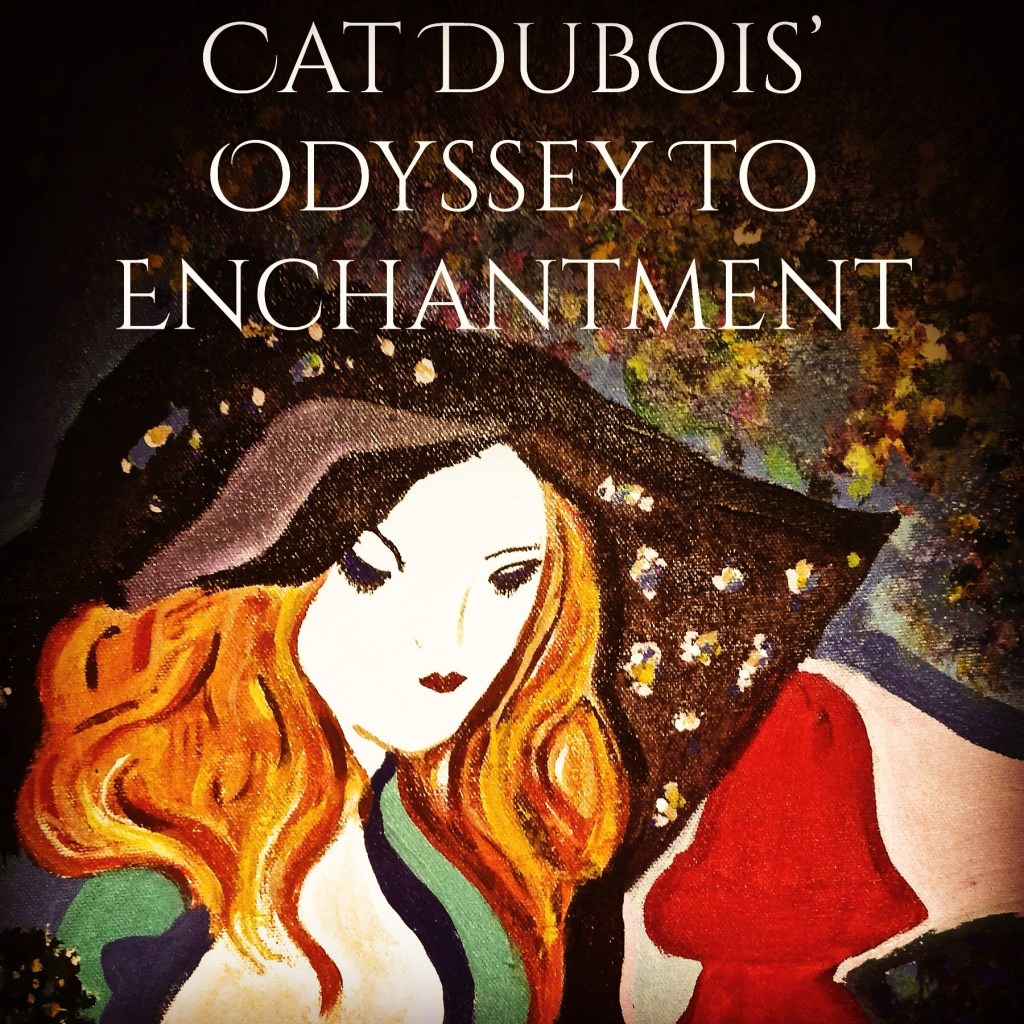
The Paperback ebook
 My Near Death Experience Arts and Thoughts