My anniversary today
February 8, 2019
After working the night shift, I came home in the early morning hours of February 8, 2019. I was profoundly ill. I had been growing steadily worse since receiving a flu vaccine in late November—despite having been medically advised years earlier never to take it again. Over time, my body began to swell dramatically, my weight increased without explanation, and my asthma, which I had lived with for many years, became increasingly severe. I relied heavily on my inhaler and Symbicort just to breathe, even while at work.
That morning, exhausted, I fell asleep. Later, my son woke me to a beautifully prepared lunch he had made for me, but I couldn’t eat. I was struggling simply to breathe.
I am a nurse, and like many nurses, I believed I could manage this myself. I trusted my experience and judgment. As the day progressed, however, my oxygen levels dropped so low that confusion and disorientation set in. By then, I was no longer capable of making rational decisions. Calling for help felt impossible—part pride, part denial, part impaired cognition.
As evening came, my condition worsened. I lost bladder control. Around 10:30 or 11:00 p.m., the news reported that it was the coldest night of the year. Ice covered the roads. The announcer warned people not to drive. Living miles outside the city, with the hospital more than twelve miles away, I remember thinking, I’ve chosen a terrible night to die.
Shortly after that thought, I collapsed. I don’t remember hitting the floor.
Time disappeared.
Sometime the next morning, my son passed my room. I told him to call an ambulance. Before help arrived, I lost consciousness again. According to my son, emergency responders performed CPR on me for over an hour before getting me to the hospital. Medical records later indicated I had been without adequate oxygen for approximately thirty minutes.
When I finally understood the hospital report—years later, with the help of a physician who patiently explained it to me—I learned the full truth: I had suffered a respiratory arrest, a stroke, and a myocardial infarction. I also sustained an anoxic brain injury.
Clinically, survival after such prolonged oxygen deprivation usually results in profound disability. Many patients never regain meaningful communication. Yet I returned.
And I believe I returned knowingly.
What Changed
My near-death experience itself was extraordinary, but what surprised me most was how much more I learned after returning. People who have had near-death experiences often describe a thinning—a loosening—between realities. Once that boundary has been crossed, perception never quite returns to its former limits.
One of the clearest lessons I was shown was this:
The fastest speed in existence is not the speed of light. It is the speed of thought.
Thought moves instantaneously. It is non-local. It is energy unbound by distance.
Another realization followed naturally: what we experience beyond the body is filtered through consciousness. People see angels, religious figures, ancestors, or symbols aligned with their deepest beliefs. My experiences involved extraterrestrial beings—not because they are more “true” than religious visions, but because they align with my core perception of reality, a perception I’ve carried since childhood.
We do not experience what others believe.
We experience what we believe.
During my experience, I observed what I can only describe as pods—structures strikingly similar to those depicted in The Matrix. Within them, consciousness appeared to be both observing and directing life simultaneously—here and elsewhere. Past and present did not feel linear. It felt holographic, layered, and ongoing.
This led to another teaching: there may be no true beginning or end—only transitions. What appear to be beginnings and endings are fragments of an ongoing evolution. Everything changes constantly: bodies, relationships, planets, stars, ideas. Life does not stop; it reshapes.
The question of God arose, as it always does. I do not deny the existence of a supreme source. But the word “God” feels too small. I was given a better term: the Primal Source—an all-encompassing totality of energy, matter, consciousness, frequency, dimension, vibration, and light. Not separate. Inclusive. Whole.
What I Know Now
The most important truth I brought back is this:
We are our perception.
Once perception expands, it cannot easily contract. We grow out of one understanding and into another, shedding former selves like cocoons. Consciousness does not die. Bodies do. Roles do. Identities do. But awareness continues.
I returned to a damaged body and a changed brain, but I also returned with certainty:
life is not fragile—it is persistent.
consciousness is not confined—it is continuous.
and meaning is not imposed—it is perceived.
This is why I write this now—seven years later—on the anniversary of my return. Not to convince, not to persuade, but to bear witness. For myself. And for anyone who may one day need to know that survival, transformation, and understanding can come from the most impossible places.
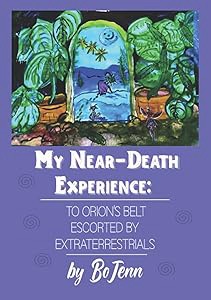
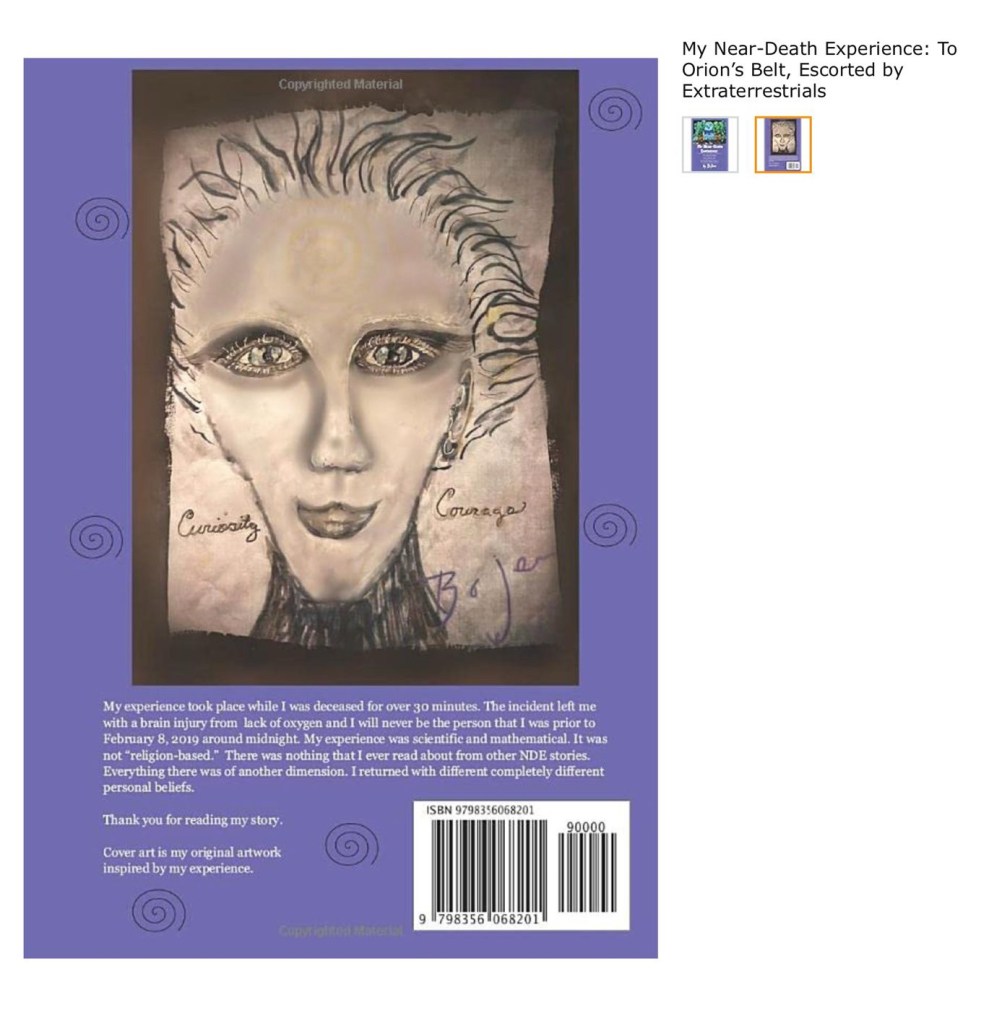
 My Near Death Experience Arts and Thoughts